

 新聞中心
新聞中心
 服務(wù)熱線電話
400-6188-756
 行業(yè)新聞
超聲波自動清洗中要注意哪些內(nèi)容?
來源:http://m.sflrw.com/ 時(shí)間: 2026-06-04 瀏覽次數(shù): 0
1.預(yù)清洗:
1. Pre cleaning:
浸泡:對于污垢較多或污垢附著力較強(qiáng)的工件,可先將其浸泡在清洗液中一段時(shí)間,使污垢初步軟化和松動,為后續(xù)的超聲波清洗打下基礎(chǔ)。浸泡時(shí)間根據(jù)工件的污垢程度和清洗液的性質(zhì)而定,一般為幾分鐘到十幾分鐘。
Soaking: For workpieces with a lot of dirt or strong adhesion of dirt, they can be soaked in cleaning solution for a period of time to soften and loosen the dirt, laying the foundation for subsequent ultrasonic cleaning. The soaking time depends on the degree of dirt on the workpiece and the nature of the cleaning solution, usually ranging from a few minutes to a dozen minutes.
噴淋:利用噴淋裝置將清洗液以一定的壓力和流量噴射到工件表面,去除工件表面的一些浮塵、碎屑等較易清洗的污垢。噴淋可以在超聲波清洗之前單獨(dú)進(jìn)行,也可以與浸泡結(jié)合,邊浸泡邊噴淋,提高清洗效果。
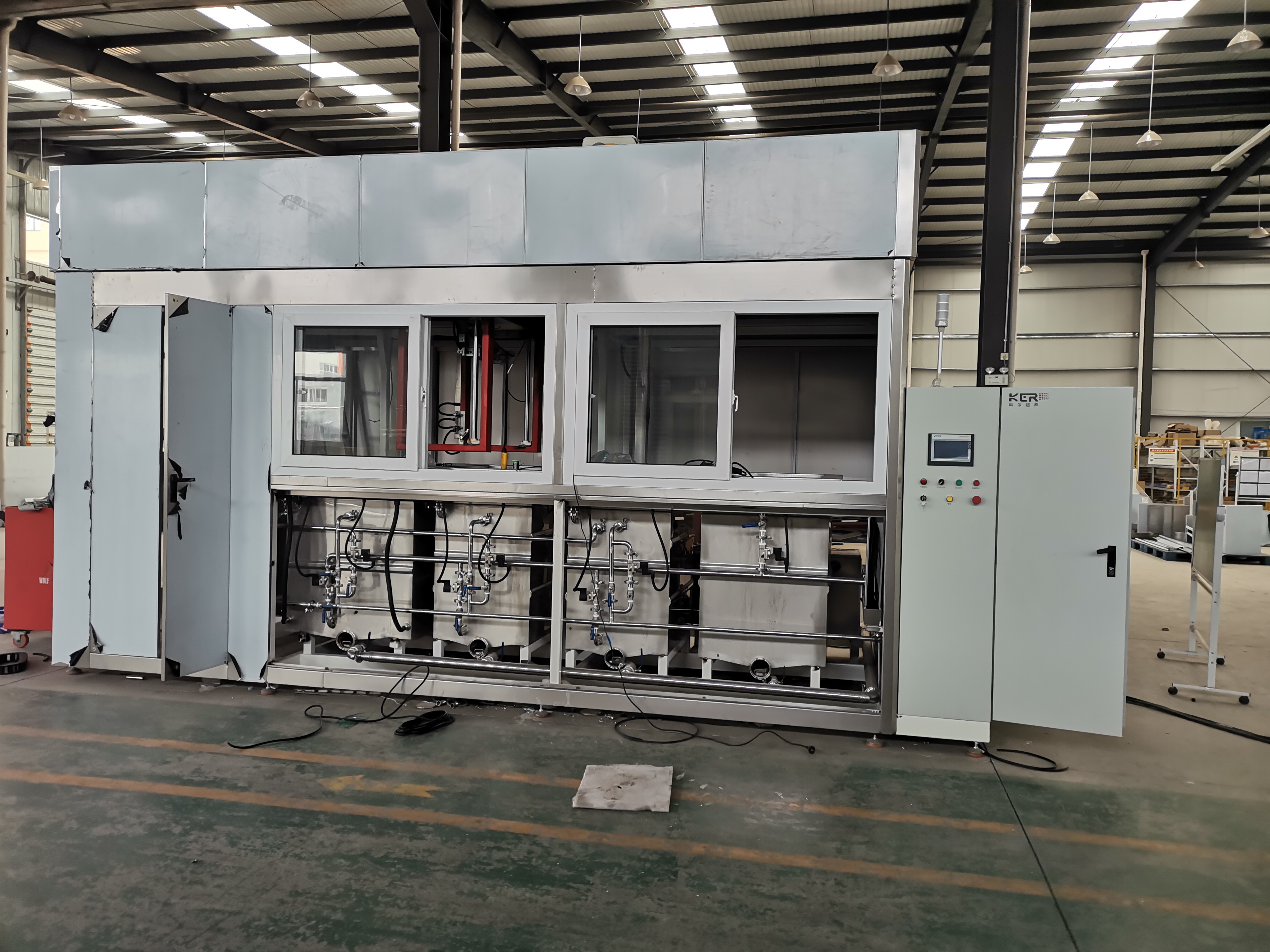
Spray: Use a spray device to spray cleaning solution onto the surface of the workpiece at a certain pressure and flow rate, removing some easily cleanable dirt such as floating dust and debris on the surface of the workpiece. Spraying can be performed separately before ultrasonic cleaning, or combined with soaking to spray while soaking, improving the cleaning effect.
沖洗:用高壓水流對工件進(jìn)行沖洗,進(jìn)一步去除工件表面的污垢和雜質(zhì)。沖洗時(shí)要注意水流的壓力和方向,確保能夠覆蓋到工件的各個(gè)部位。
Rinse: Rinse the workpiece with high-pressure water flow to further remove dirt and impurities from the surface of the workpiece. When flushing, pay attention to the pressure and direction of the water flow to ensure that it can cover all parts of the workpiece.
2.超聲波清洗:這是整個(gè)工藝的核心環(huán)節(jié)。
2. Ultrasonic cleaning: This is the core link of the entire process.
超聲波清洗:超聲波發(fā)生器將電能轉(zhuǎn)換為高頻電信號,驅(qū)動換能器工作,換能器將高頻電信號轉(zhuǎn)換為機(jī)械振動,在清洗液中產(chǎn)生超聲波。超聲波的空化作用、乳化作用和加速度作用等會使清洗液中的微小氣泡迅速膨脹、閉合,產(chǎn)生強(qiáng)烈的沖擊波和射流,從而剝離和去除工件表面的污垢。
Ultrasonic cleaning: The ultrasonic generator converts electrical energy into high-frequency electrical signals, drives the transducer to work, and the transducer converts the high-frequency electrical signals into mechanical vibrations, generating ultrasonic waves in the cleaning solution. The cavitation, emulsification, and acceleration effects of ultrasound can cause small bubbles in the cleaning solution to rapidly expand and close, generating strong shock waves and jets, thereby peeling and removing dirt from the surface of the workpiece.
3.漂洗:
3. Rinse:
超聲波漂洗:用超聲波對經(jīng)過清洗的工件進(jìn)行漂洗,去除工件表面殘留的清洗液和污垢。漂洗時(shí)可以使用純水或添加了一定添加劑的水作為漂洗液,以提高漂洗效果。
Ultrasonic rinsing: Rinse the cleaned workpiece with ultrasonic waves to remove residual cleaning solution and dirt on the surface of the workpiece. When rinsing, pure water or water with certain additives can be used as the rinsing solution to improve the rinsing effect.
噴淋漂洗:在超聲波漂洗之后,再次使用噴淋裝置對工件進(jìn)行漂洗,進(jìn)一步去除工件表面的殘留物質(zhì)。噴淋漂洗可以使用高壓純水,確保工件表面的清潔度。
Spray rinsing: After ultrasonic rinsing, the workpiece is rinsed again using a spray device to further remove residual substances on the surface of the workpiece. Spray rinsing can use high-pressure pure water to ensure the cleanliness of the workpiece surface.
4.干燥:
4. Drying:
熱風(fēng)干燥:利用熱風(fēng)機(jī)或熱風(fēng)循環(huán)系統(tǒng),將熱空氣吹向工件表面,使工件表面的水分迅速蒸發(fā),達(dá)到干燥的目的。熱風(fēng)干燥的溫度和時(shí)間要根據(jù)工件的材質(zhì)和尺寸進(jìn)行調(diào)整,避免溫度過高導(dǎo)致工件變形或損壞。
Hot air drying: Using a hot air blower or hot air circulation system, hot air is blown onto the surface of the workpiece to rapidly evaporate the moisture on the surface, achieving the purpose of drying. The temperature and time of hot air drying should be adjusted according to the material and size of the workpiece to avoid deformation or damage caused by excessive temperature.
真空干燥:將工件放置在真空干燥箱內(nèi),通過抽真空降低箱內(nèi)的氣壓,使工件表面的水分在低壓下快速蒸發(fā)。真空干燥可以有效地去除工件內(nèi)部的水分和氣體,適用于一些對干燥要求較高的工件。
Vacuum drying: Place the workpiece in a vacuum drying oven and rapidly evaporate the moisture on the surface of the workpiece under low pressure by vacuum dropping the air pressure inside the oven. Vacuum drying can effectively remove moisture and gas inside the workpiece, and is suitable for some workpieces with high drying requirements.
擦干或甩干:對于一些小型或簡單的工件,可以采用擦干或甩干的方式進(jìn)行干燥。擦干時(shí)要使用干凈的布或紙巾,避免再次污染工件;甩干時(shí)要注意控制甩干的速度和時(shí)間,防止工件損壞。
Drying or spin drying: For some small or simple workpieces, drying or spin drying can be used. When drying, use a clean cloth or tissue to avoid contaminating the workpiece again; Pay attention to controlling the speed and time of spin drying to prevent damage to the workpiece.
本文由全自動超聲波清洗機(jī)友情奉獻(xiàn).更多有關(guān)的知識請點(diǎn)擊:http://m.sflrw.com真誠的態(tài)度.為您提供為多維度的服務(wù).更多有關(guān)的知識我們將會陸續(xù)向大家奉獻(xiàn).敬請期待.
This article is a friendly contribution from the fully automatic ultrasonic cleaning machine For more information, please click: http://m.sflrw.com Sincere attitude To provide you with comprehensive services We will gradually contribute more relevant knowledge to everyone Coming soon.
相關(guān)產(chǎn)品
相關(guān)文章
-
臺式超聲波清洗機(jī)的日常維護(hù)需要注意什么? 2026-09-14
-
通過式清洗機(jī):產(chǎn)線清洗的通用平臺 2026-09-12
-
高壓去毛刺清洗機(jī)以水代刀的精密處理方案 2026-09-10
-
碳?xì)淝逑礄C(jī)是環(huán)保清洗機(jī)的重要組成! 2026-09-07
-
多槽式超聲波清洗機(jī)如何實(shí)現(xiàn)批量清洗的出色與零殘留雙重保障? 2026-09-05
-
多槽式超聲波清洗機(jī)為何成為工業(yè)精密清洗流水線的標(biāo)配? 2026-09-03
-
工業(yè)清洗提質(zhì)增效!全自動超聲波清洗機(jī)使用優(yōu)勢與保養(yǎng)指南 2026-09-01
-
真空技術(shù):讓碳?xì)洹懊撎Q骨”的魔法! 2026-08-29
-
高壓去毛刺清洗機(jī)相當(dāng)于用水刀削掉金屬毛刺 2026-08-26
-
CNC高壓清洗機(jī):給精密零件做深層級別的清洗 2026-08-24


 魯公網(wǎng)安備37011202000628號